
Meet our members: Lesley Allan
Joining a movement like Look Up and Beyond, we each have our own “why”. In this Meet Our Members series, our members share their own motivations for joining LUAB, and why they have chosen to dedicate themselves to achieving better gender balance in the legal profession and beyond. Next, meet one of our founding members, Lesley Allan.
Meet Lesley Allan
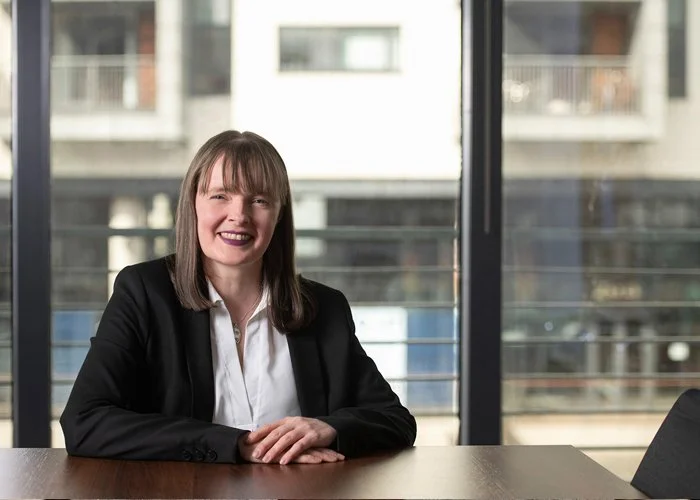
Current role/position in law
Partner
Where in Scotland are you based?
Glasgow / Edinburgh
One sentence that captures who you are (personally or professionally)
A solicitor with over 30 years of experience, but more importantly, a mum of two with over 20 years of experience!
Lesley’s Journey in Law
What inspired you to pursue a career in law?
I don’t think I could point to one single thing – I enjoyed problem solving, and wanted to work in a role that would involve offering answers and solutions to people facing difficulties. I wanted challenging work that would always remain interesting and would provide wide variety. However, I did not know any lawyers and had no real experience of the profession, so was basing decisions with very little real information about or understanding of what I was getting into!
What challenges have you faced as a woman in the legal profession?
Predominantly issues around juggling demands of work and demands outside of work, but also many occasions where I turned up and did not look like the advisor people expected – including one day in a Police Station when an officer came into the Reception I was sitting in, looked all round including looking directly at me, then shouted back into the open door he had just been sent through that “There’s no lawyer out here!”.
What has been one of your proudest moments so far in your career?
I won my first proof while I was in my last seat of my traineeship – without disclosing details, my witnesses were involved in quality assurance on the service their employer provided, and this was a test of whether their work added value to their employer, so that aside from the damages at stake, upcoming pay reviews were also an issue – no pressure…I learned a huge amount from this, not least that all legal disputes, even when related to contracts and invoices, are at their heart about individual people, with individual concerns, interests and responses to the dispute.
Why Look Up and Beyond?
What inspired you to co-found Look Up and Beyond?
The project started with a post by Naeema which expressed so clearly a number of thoughts I had also been having. Women were in the minority in my graduating class. We entered a profession with limited role models for us, especially if we were looking for role models of intersectionality. I can now look around our profession and see great things achieved by women I graduated, trained, or worked alongside. However, I am confident that many of these women have experienced the challenges that were inherent in women entering a profession that ran on systems not built by us or for us. The risk is that progressing by overcoming high hurdles created for women by such systems becomes normalised, and that progressing in this way becomes a way of demonstrating that you have earned your place. The same challenges could then remain for the generations following. I was very interested in working with women who want to pass on what we have learned and experienced to lower or remove those hurdles, and to allow women to progress in the profession based on ability, talent, and passion for serving clients, not on their ability to fit into systems and strategies that may no longer be serving a profession where most law graduates are female.
What does advancing female talent in Scottish law mean to you personally?
I can identify points where I benefitted from senior leaders taking decisions about my career that were based on conscious effort to allow me to continue to progress, while I navigated caring roles, parenthood, social mobility, health concerns, and all of the other “real life” that happens outside the workplace. I know the value I personally placed on that, and how grateful I still am for those people. Advancing female talent means making that the norm, and to me personally, that means being confident.
What do you hope LUAB will achieve for women in law?
To use our lived experience, and the voices we have within the profession, to make sure that what can be learned from our experiences will make life more manageable for the female talent currently building careers.
What advice would you give to young women entering the profession today?
Find your tribe – networking is not something that comes naturally to many people, but put yourself out there at the events the profession offers, and find those who understand your path and will walk with you. Find you role models – and if you are finding it challenging to identify who your role model is, reach out to us, let us help with that. Find a mentor – a trusted sounding board who will help you make plans and decisions. And, as you progress, find the people you too can offer support and encouragement to. Reach out to those you can build up, and offer them what you would have valued when you were in their shoes – trainees have insights that benefit students, so start early, this is not just for senior leaders. A rising tide lifts all boats…
Beyond the legal profession
What do you do outside of law that keeps you grounded or inspired?
I love the theatre – especially ballet – and nothing beats being part of a crowd being boosted by live music. A part of my heart will always be in Barrowland Ballroom! A special memory – being in the crowd there, with my daughter, hearing Billy Bragg singing Tank Park Salute as my return to live music after the pandemic and feeling like I had been allowed to come home. I also love getting out and walking – very lucky to live on the edge of a country park, and within striking distance of (at least!) seven lochs. Tree bathing is definitely real!
A fun fact or little-known detail about you.
I can tap dance.
What’s one “look up and beyond” dream you have for yourself or for women in law?
A dream of a profession where women can have honest conversations about the challenges they navigate without concern that this will adversely affect their prospects – and a dream of a profession where most of those challenges are known and recognised by leaders, and there are tried and tested strategies to manage them.